
Feb 20, 2026
Go Back
Good Bedtime Music For Kids: Classical Music For Children's Sleep
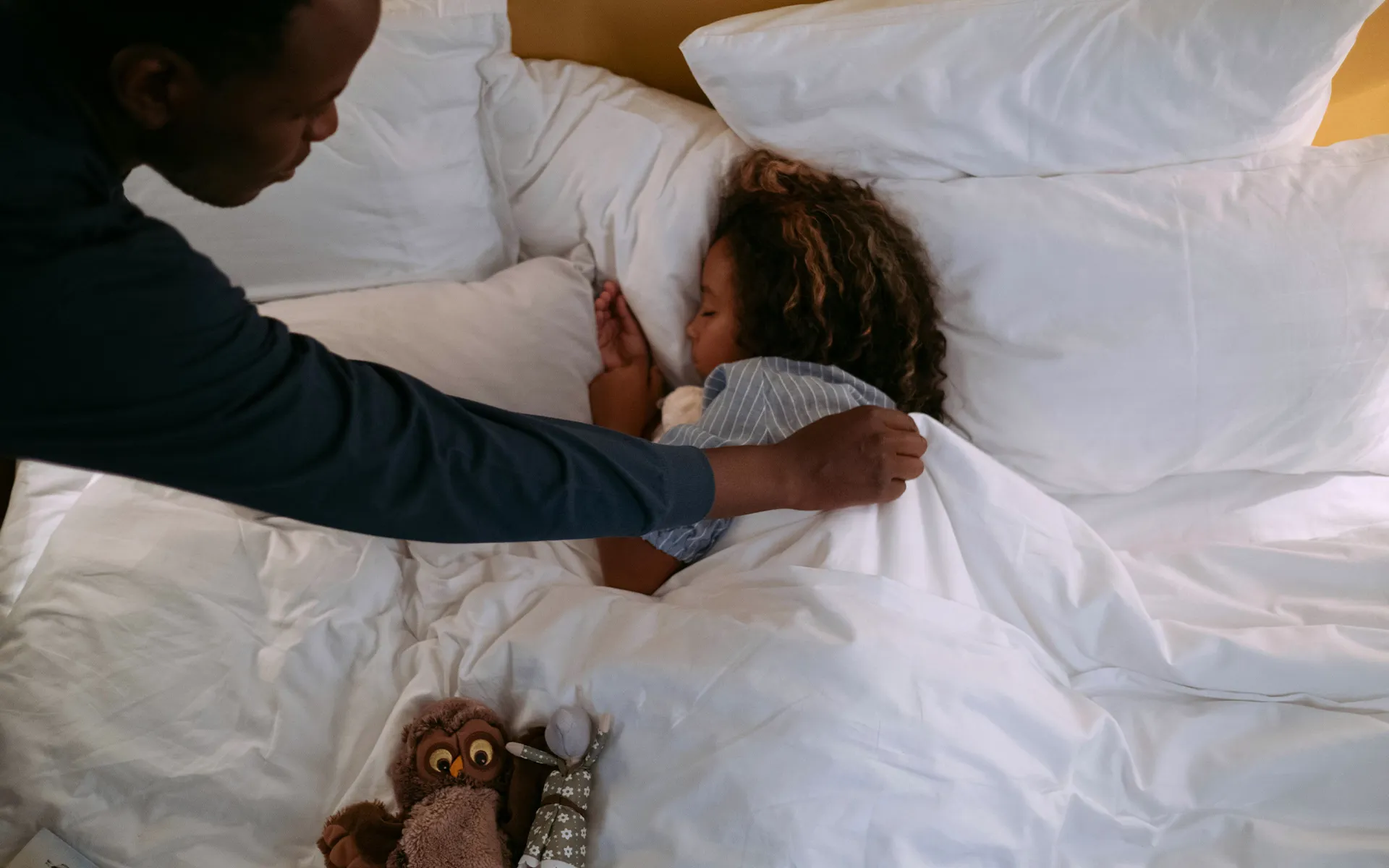
Maybe you’ve tried blackout curtains, the right pyjamas, even the “one more story” negotiation with your little one. Now you are wondering if classical music, such as soft piano, might make bedtime smoother.
However, there are so many playlists promising miracle results that it is hard to know what actually counts as healthy, realistic bedtime music for kids.
Here’s what we know about children, sleep, and music, and how to choose what belongs in your toolbox.
Why Sleep Matters So Much For Kids
Before we zoom in on audio, it helps to remember why you are working this hard on bedtime in the first place.
Can kids get by with less sleep than adults? It may seem that way, but there’s more to sleep than just functioning from day to day. Healthy sleep supports growth, learning, mood, and immune function in children. The Journal of Sleep Medicine recommends around 10 to 13 hours of total sleep for preschoolers and 9 to 11 hours for most school-aged kids.
The challenge is that many children simply are not getting enough. This report from Harvard Medicine says that only about half of children are getting the recommended sleep hours, often because late bedtimes, busy schedules, and screen time get in the way.
So if you are thinking about using music as part of your kid’s sleep routine, you are on the right path. It’s a sustainable way to protect something that matters to your child’s health.
But there are usually a few reasons that parents turn to music for bedtime. The biggest ones we hear about include:
“My child is wired at bedtime and cannot seem to wind down.”
“Every small noise wakes them back up.”
“They beg for YouTube or Netflix to fall asleep, and then they stay up late.”
Music feels like a nice middle ground. It is not more screen time, it feels nurturing, and it is something you can share.
What We Know About Music And Sleep
Relaxing music before bed can shorten the time it takes to fall asleep and improve sleep quality for some.
Several studies point to slow, steady music in the range of roughly 60 to 80 beats per minute being particularly helpful. This tempo is close to a resting heart rate and is associated with relaxed “alpha” brain waves.
There is less research specifically on kids and piano at bedtime, but we do have related clues:
Lullabies and gentle singing are associated with calmer babies, easier settling, and stronger parent–child bonding.
Calm classical music can have a soothing effect on babies’ heart rate patterns even before birth.
Across many genres, music that helps people sleep tends to share features like moderate tempo, smooth “legato” playing, and limited sudden volume changes.
Why Piano Can Be A Good Choice
Piano earns its popularity for a few practical reasons.
First, it can be very simple. A solo piano track with a gentle tempo and repeating patterns can feel soothing for both kids and adults. Research on piano music suggests that it can support recovery of the autonomic nervous system, the part that controls heart rate and stress responses.
That said, not every piano track is created equal.
When Classical Music Might Not Help
Classical music—like piano—can be lovely at bedtime, but it is not magic. There are a few ways it can work against you:
Too dramatic. Highly emotional pieces with big dynamic jumps can keep the nervous system on alert instead of letting it wind down.
Too catchy. Strong, singable melodies can turn into “earworms,” or songs that replay in your child’s head when they are trying to sleep. Some research suggests that catchy music at bedtime may increase these involuntary musical images and interfere with sleep for some people.
Too loud or too busy. Dense, fast passages can feel mentally stimulating rather than relaxing.
And for some children, especially those with neurodevelopmental differences, certain audio at bedtime can be distracting. So you might have to choose between a few types of music before you find something that does the trick.
The Traits Of Calm Piano Sleep Music
Here are some features to look for when you are choosing piano tracks as bedtime music for kids:
Slow to moderate tempo. Aim for songs that feel closer to resting heart rate, often around that 60 to 80 beats per minute range. The last thing you want is for your child to feel overstimulated just as they’re trying to wind down.
Soft dynamics. Volume should stay fairly even, without sudden crescendos that could trigger micro-awakenings throughout the night.
Repetitive patterns. Gentle, looping motifs help the brain predict what is coming next, which tends to feel safer and calmer.
Minimal percussion and bass. Heavy drums or thumping bass lines can be activating.
Few or no lyrics. Words tend to invite singing along or thinking about the story, which is not what you want when you are trying to drift off.
If a track makes you want to sit up and listen more closely, it is usually better for daytime than for bedtime.
How To Use Piano As Bedtime Music For Kids
Piano works best when it is part of a larger sleep routine, not a standalone trick. You can think in three stages: wind-down, transition, and sleep.
Wind-Down: Set The Tone
Use classical music, such as piano, as part of a short, predictable routine 20 to 40 minutes before lights out. This might include:
Dimming lights.
Putting away devices.
A bath or warm shower.
Reading together while music plays quietly in the background.
Music here acts as a cue that bedtime is coming, similar to how lullabies signal “sleep time” in many cultures.
Transition: From “Up” To “Down”
When it is time for your child to get into bed, you can keep the same piano playlist going or switch to an even slower set of tracks.
A few practical tips:
Keep the volume low. The music should sit behind your voices, not compete with them.
Place speakers away from the bed. For younger children, keep devices several feet from the crib or bed to protect hearing.
Avoid screens in the room. If you are streaming from a phone, try placing it face down. Light exposure is consistently linked to sleep difficulties.
This is also a good moment to pair the music with simple relaxation cues, such as a few slow belly breaths or a very short body scan (“Notice your toes relaxing, then your legs, then your tummy...”).
Sleep: Decide Whether Music Stays On
Once your child is very drowsy or asleep, you have two options:
Let the music run all night.
Use a timer so that the audio stops after 30 to 60 minutes.
Continuous gentle sound can help mask environmental noises like traffic or hallway footsteps, which is especially helpful if your child is a light sleeper.
On the other hand, if they seem to wake up when the song changes, or you suspect earworms will keep them more alert, trialling a timer can be useful.
There is no single correct answer. The best choice is the one that gives your child stable, reasonably consolidated sleep and is sustainable for you.
Safety And Realistic Expectations
A few quick notes for safety (and sanity):
Hearing safety. For babies and young children, keep sound machines and speakers at a safe distance and at low volume. This reduces the risk of long-term noise exposure.
It’s not a smoking gun for “curing” insomnia. While relaxing music can support healthy sleep habits, it is not a treatment for underlying medical issues. If your child snores loudly, gasps in sleep, has night terrors, or struggles badly despite a good routine, it is worth speaking with a health care provider.
Watch how your child actually responds. Some kids genuinely relax with piano. Others perk up like it is a concert. Their response to the genre is more important than any playlist description.
Piano sleep music can be a gentle tool that tips the nervous system toward calm, but it’s not a magic fix for everything. Calming music can lower heart rate and support a shift from a stressed “fight or flight” state toward a more relaxed “rest and digest” state, but the magic formula also depends on the child.
A Simple Way To Test Piano At Bedtime
If you want to experiment without overwhelming yourself, you can try this simple one-week plan:
Night 1 to 2
Choose one short playlist of calm, lyric-free piano. Use it during the wind-down routine and at least the first 30 minutes in bed. Keep everything else about bedtime the same.
Night 3 to 4
Notice patterns. Do they seem calmer while the music plays? Are there more “But I am not tired” negotiations, or fewer?
Night 5 to 7
Adjust based on what you saw. For example:
If your child relaxes but wakes when the music stops, try slightly longer playback.
If they get too focused on the songs, try turning music off at lights out and using it only before bed.
If they complain about the piano itself, consider trying a different gentle genre, like ambient or rain.
The goal is not perfection in seven nights. It is to learn how your unique child responds.
So, does piano work for bedtime? For many families, yes, it can be a very comforting part of the evening, especially when you choose slow, gentle tracks and pair them with a consistent routine. The key is to treat piano as one piece of a bigger sleep picture, not the whole answer.
If you would like some help curating that audio without spending your evenings scrolling through playlists, try our Dreamwell app. It offers calming piano and other science-informed sleep sounds that are tuned for different sleep challenges, so you can experiment and see what actually helps your child wind down.
Newsletter
Get early access to new soundscapes, features, and sleep insights.